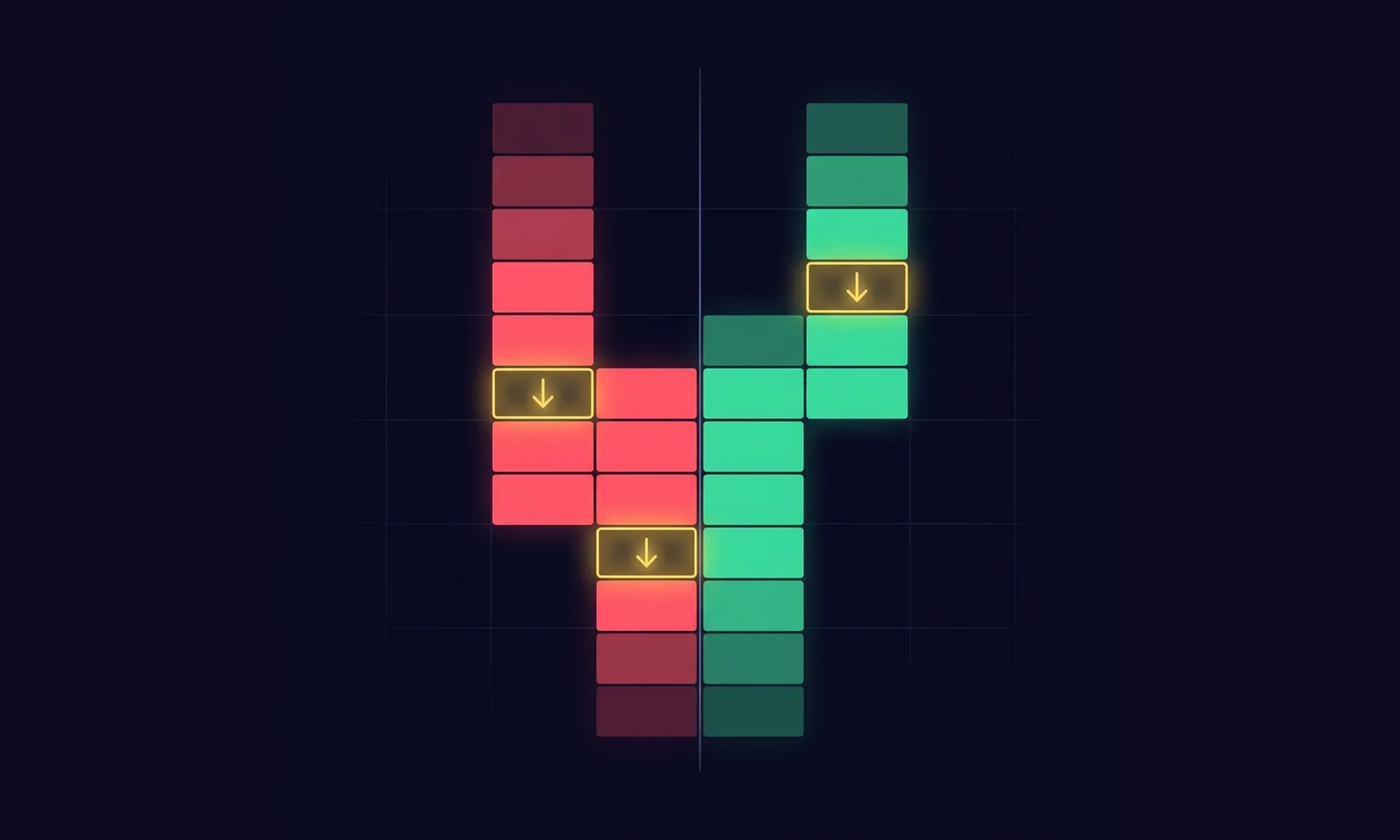
A big-trades visualization draws every aggressive market print as a bubble — the bigger the volume, the bigger the bubble; green for buys into the ask, red for sells into the bid. The power of the tool is not in seeing hundreds of bubbles. It is in anomalies: rare situations where something statistically exceptional happens in one spot. They don't occur ten times a day — but when they do, they hand you a serious edge.
Anomaly #1: extreme volume at the daily high/low
When an extreme number of contracts trades against zero on the other side right at the current daily extreme (e.g. hundreds of asks at the high, no bids), markets don't "end" like that — they have an extreme tendency to come back to that level and repair the auction.
- Rough thresholds: on ES around 500+ contracts at one price, on CL 200–300; the more liquid the market, the bigger the number you want.
- Not valid after news — an extreme created by a news spike doesn't carry this logic.
- Same family: the "bad low/high" — absorption on the bid with 2+ zeros on the ask right at the daily extreme.
Anomaly #2: exhaustion
The market keeps hitting a level and the bubbles shrink with every candle while price stagnates. The fuel is running out — that is not a pause, it's aggression drying up. It often precedes a reversal, especially at a key level.
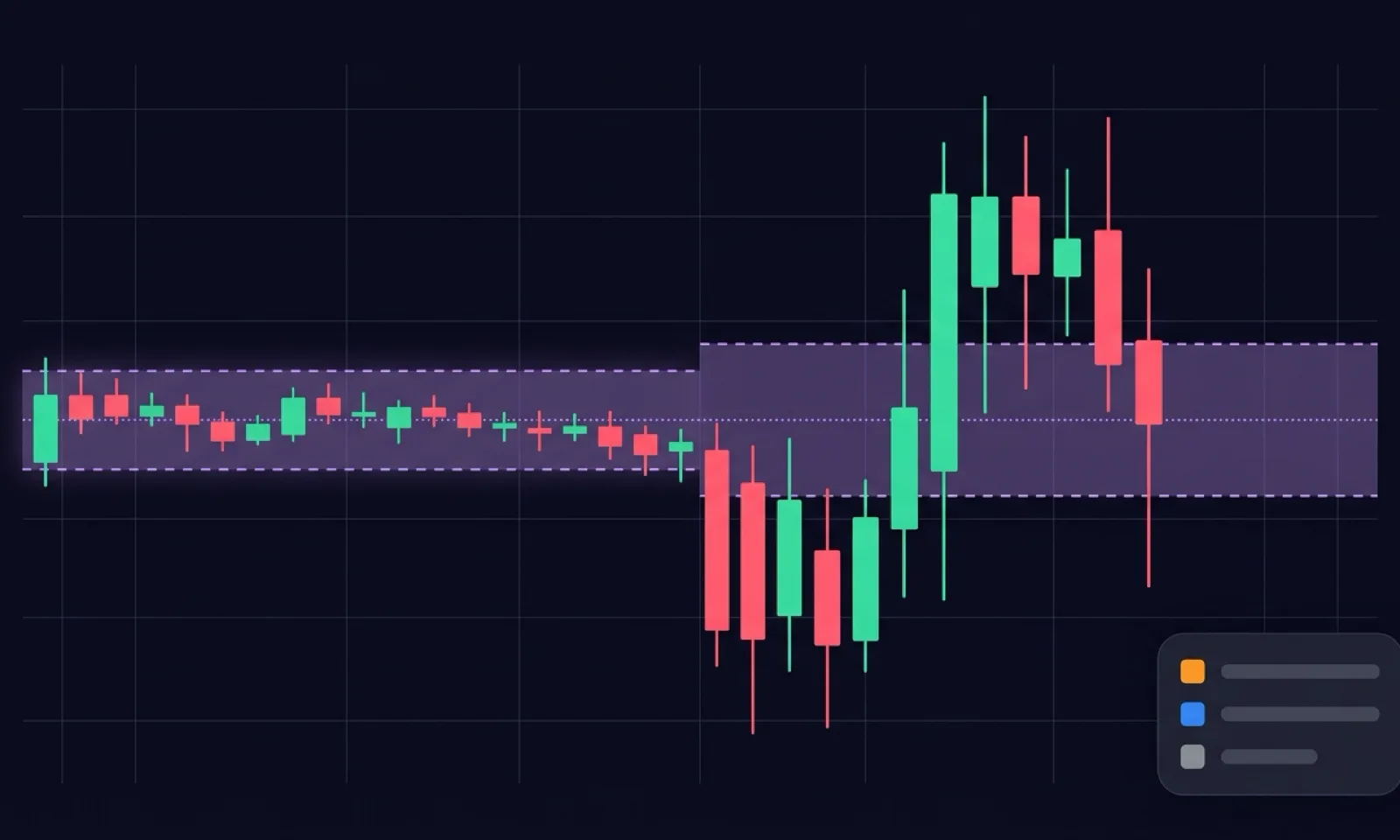
Anomaly #3: sweep / stop run
A fast spike through a known level with almost no large bubbles printing on the break — followed by a sharp return. The market just went to collect liquidity (stops) and came back. You recognize the false break precisely by the missing participation of big money where a real breakout would need a flood of market orders.
Bubbles × wall: who won?
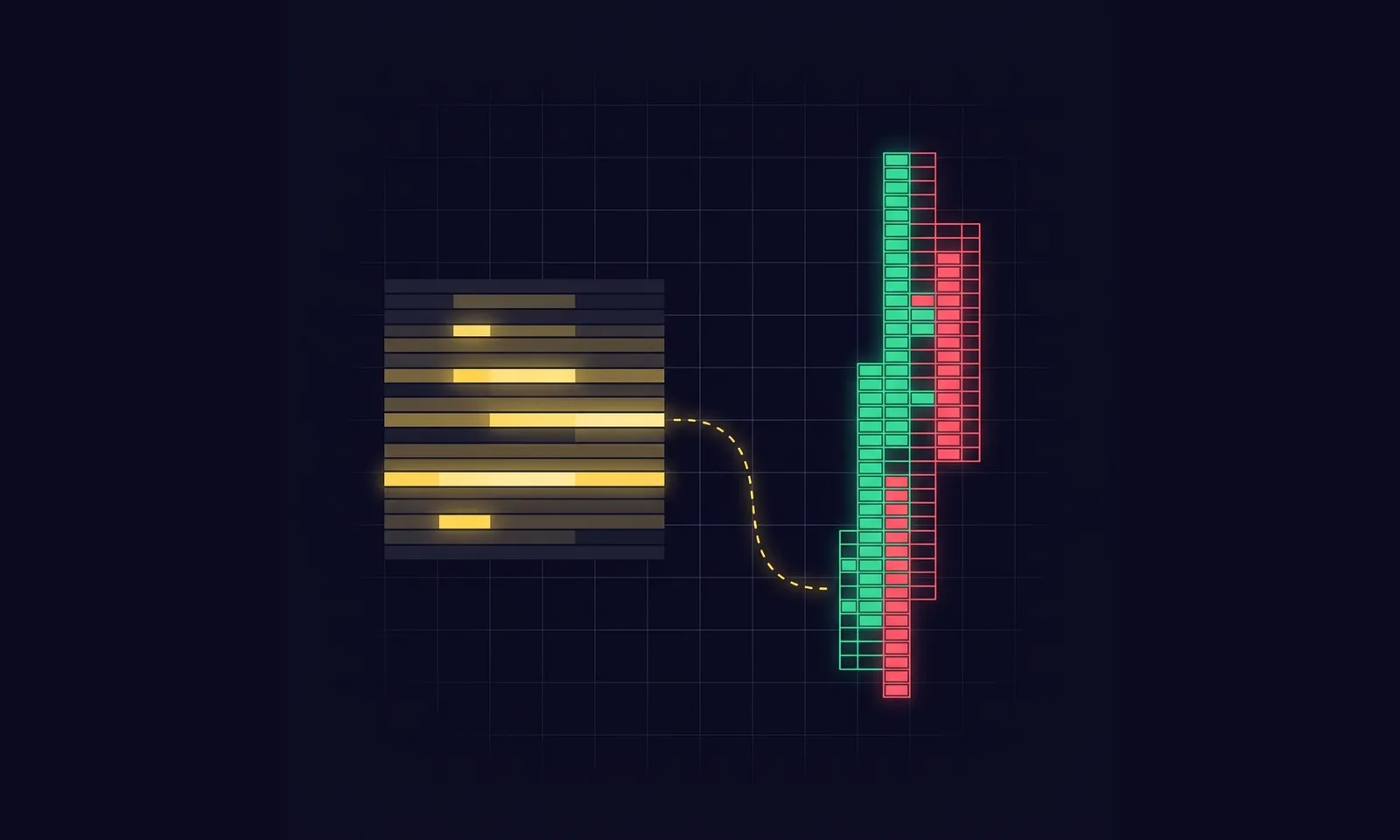
The most valuable combination is with the order book (the liquidity heatmap): large bubbles repeatedly hitting a level while price doesn't move = absorption, the passive player is winning. Large bubbles and the level gives way = aggression won, the level fell legitimately.
The most common mistakes
- Hunting anomalies in the middle of an empty chart. Every one of these patterns stands and falls with context — look for them at significant levels (daily extremes, S/R zones, value area), not mid-rotation.
- Forcing the market into your own picture. The right order: idea and level first, the anomaly as confirmation second. Whoever finds a pattern first and invents the story afterwards keeps getting slapped.
- Absolute numbers without the instrument. 100 contracts is a different message on NQ than on a micro — always scale to the market's normal.
- Ignoring news and session time. The same bubble means something completely different in the thin Asian session and after the US open.
Style fit and what it brings
Big trades are a day trading and intraday swing tool. They don't produce many signals — they produce a few very high-quality pieces of information: where the market will almost certainly come back to repair an auction, where aggression is dying out, and where a break was nothing but a stop run.
Frequently asked questions
What counts as a "big trade"?
A single aggressive market order that is large relative to the market average. Bubbles size each print by volume so these stand out from routine flow.
What does the colour mean?
Green = a buy executed at the ask (the buyer was the aggressor); red = a sell executed at the bid (the seller was the aggressor). It is the aggressor side, not who won.
Does a big buy mean price goes up?
Not necessarily. The key read is the reaction: a large buy that fails to lift price means a bigger passive seller is absorbing it — often a reversal tell.
How is this different from a volume bar?
Volume is the total; big-trade bubbles isolate the individual large aggressive prints and their side, so you see who acted, not just how much traded.
How do I use big trades in a setup?
As confirmation at a level: aggressive size pushing through is continuation; aggressive size absorbed and rejected at support or resistance is a reversal candidate.
The Big Trades study in WyckFlow draws large aggressive trades as bubbles with smooth zoom-aware merging, tooltips and alerts on oversized prints. Related reading: Liquidity Heatmap, Icebergs, Bar Delta.