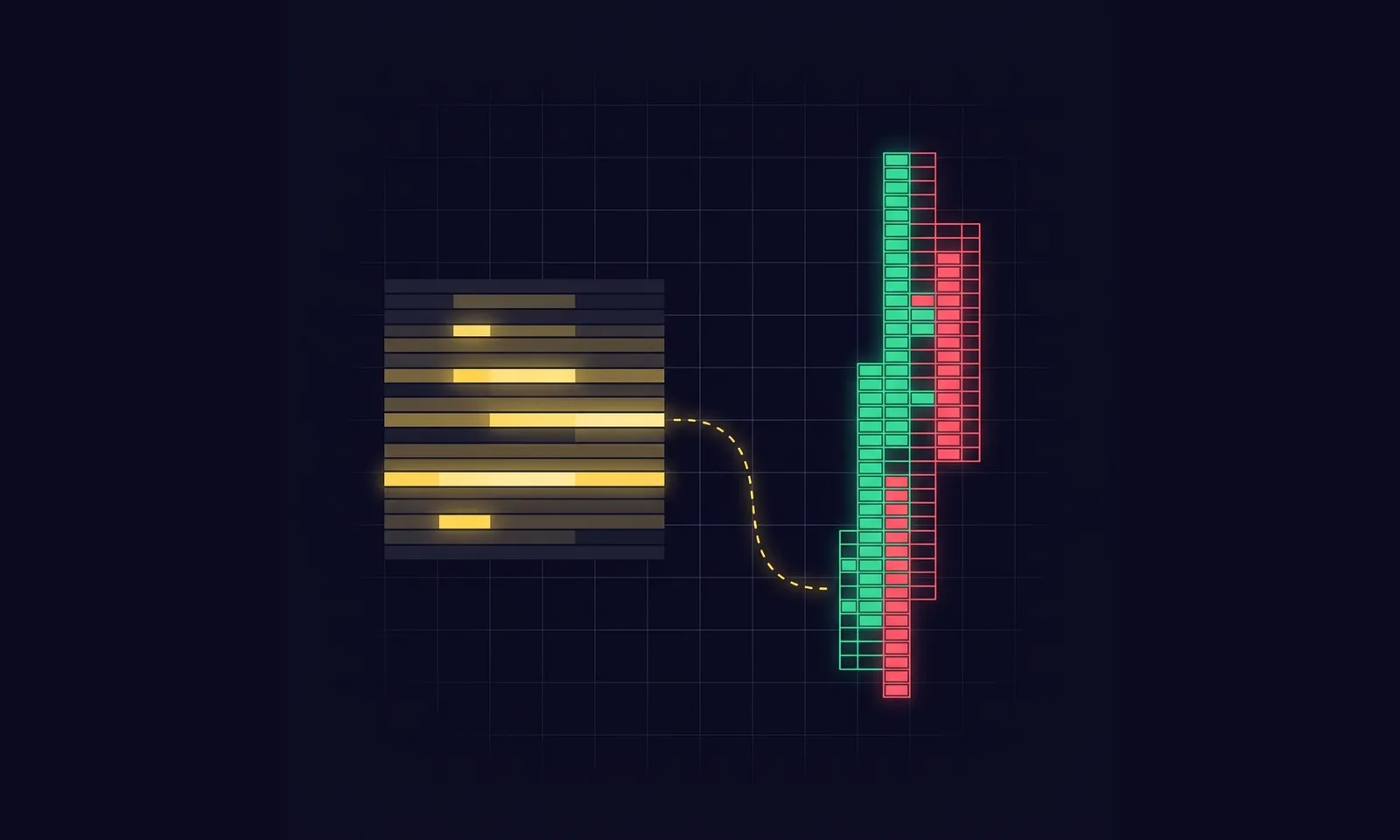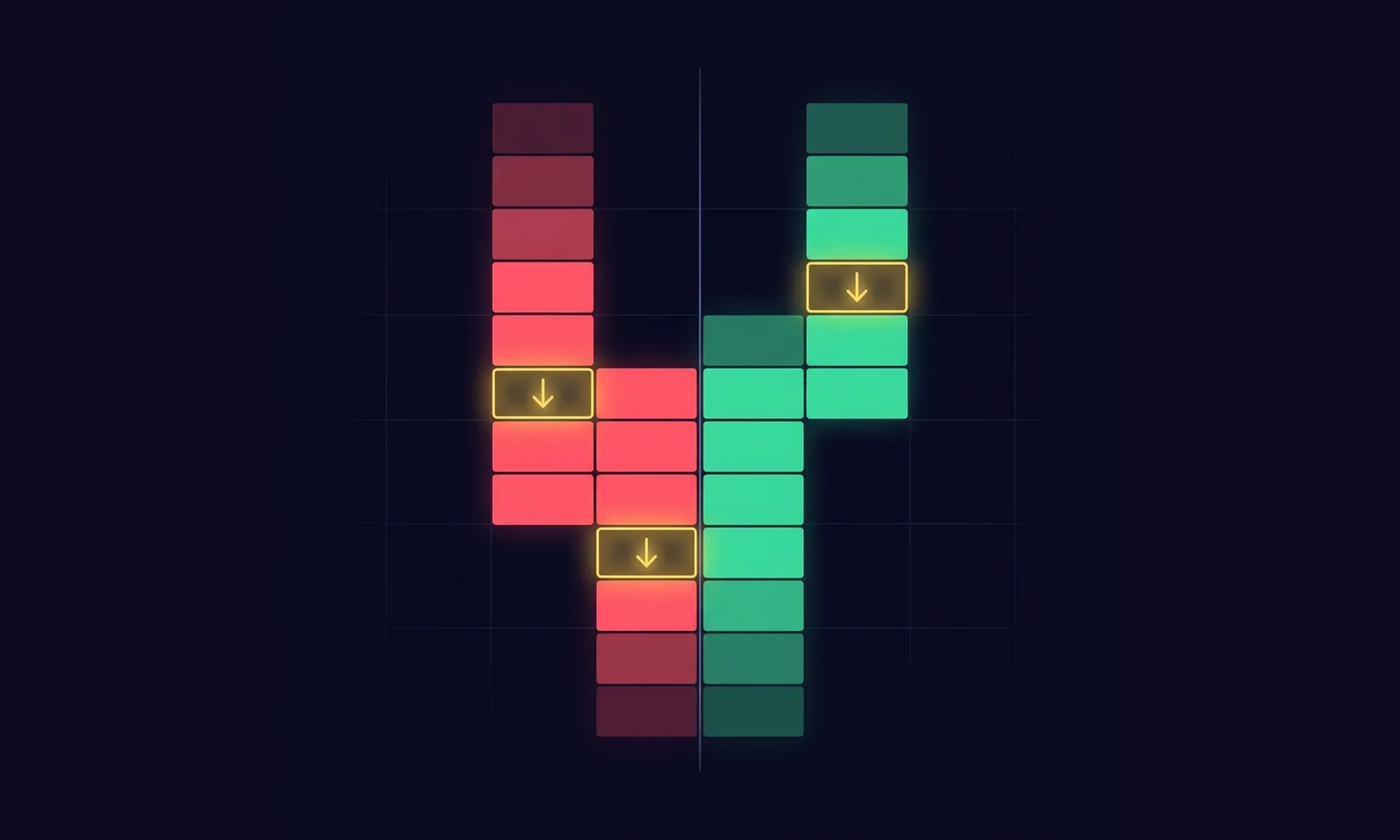
A single bar's delta = aggressive buys minus aggressive sells inside that bar. It is the fastest answer to "who is winning right now" — and also the tool beginners most often overtrade with.
The base rule (and the exception that IS the signal)
In the vast majority of cases an up candle has positive delta and a down candle negative. It is not a law, though — and the exceptions carry the information:
- Up candle + negative delta = sell-side absorption: aggressive sellers sold, yet price rose — they are falling into a passive buyer's trap.
- Down candle + positive delta = long absorption: aggressive buyers are trapped, price went against them.
Careful: this short-term absorption is visible on almost every candle. By itself it is NOT a signal.
Three practical uses
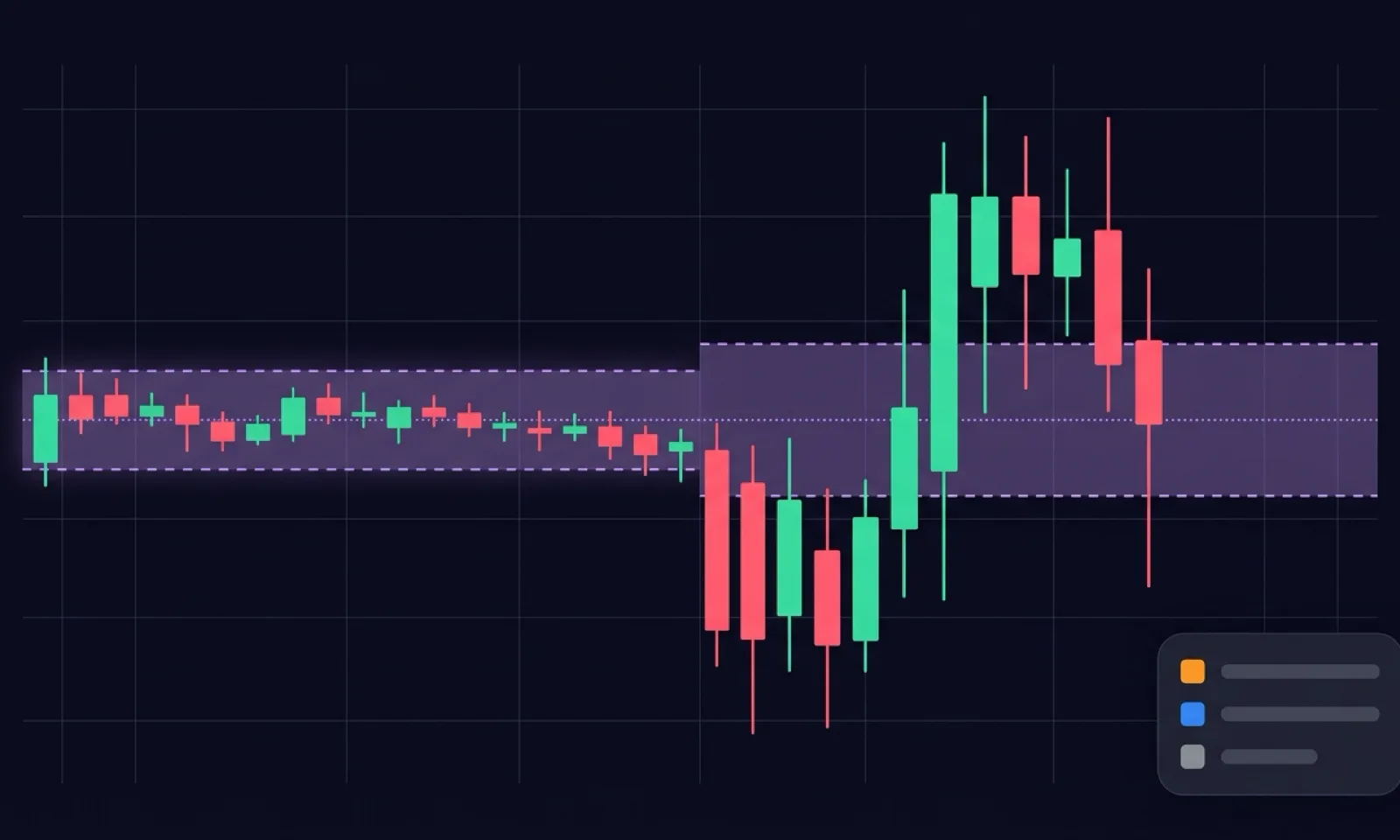
- Breakout confirmation. A valid break wants high volume + delta in the direction of the break (short break = strongly negative delta) + imbalances in that direction + minimal interest from the other side. Then a shallow, fast pullback. A break with tepid or opposite delta is a trap candidate.
- The bottom of a panic flush (one-way auction). The candle that slams into support with the most negative delta and the biggest volume of the whole move often triggers the reversal domino — panicked sellers sold the low, and their covering fuels the snap-back.
- Fading aggression in a trend. Shrinking delta on new extremes = the dominant side is losing conviction.
The most common mistakes
- Trading every absorption. Once you discover it, you will see it everywhere — a psychological trap that leads straight to overtrading, the beginner's biggest tragedy. Absorption carries weight only in confluence with a key level (S/R, value area, session extreme).
- Assuming candle colour = delta. An unverified intuition; the mismatch is exactly where the information lives.
- Reading delta without volume. A +20 delta on 30 contracts is noise. Always scale it against what's normal for the market and the time of day.
- Ignoring session context. Delta in the thin Asian session and delta after the US open are different worlds.
Style fit and what it brings
Per-bar delta is a scalping and day trading tool — instant confirmation of strength or weakness of the move happening right now. Paired with CVD you get the full picture: delta says "what is happening now", CVD says "who is winning over time".
An honest note: delta is a thermometer of aggression, not a crystal ball. It pays the trader who uses it to confirm a pre-built idea at a pre-built level — not the one chasing it candle by candle.
Frequently asked questions
What is bar (per-candle) delta?
Aggressive buy volume minus aggressive sell volume for that one bar. Positive means buyers were the aggressors, negative means sellers.
How is bar delta different from CVD?
Bar delta is one candle's net aggression; CVD is the running sum of those deltas. Bar delta is the building block, CVD is the cumulative story.
What does a big delta with a small candle mean?
Absorption: lots of aggressive trading but price barely moved, so the other side absorbed it passively — often a reversal warning at an extreme.
And a strong candle on weak delta?
The move had little aggressive backing, so it can be thin and prone to fade, especially into a key level.
Can delta be positive while price falls?
Yes — that divergence (buyers aggressive, price down) means sellers are absorbing the buying. Effort without result is the signal.
The Delta Volume study in WyckFlow draws per-bar delta as a clean histogram with live updates inside the forming candle. Related reading: CVD, Footprint: Imbalance & Absorption.