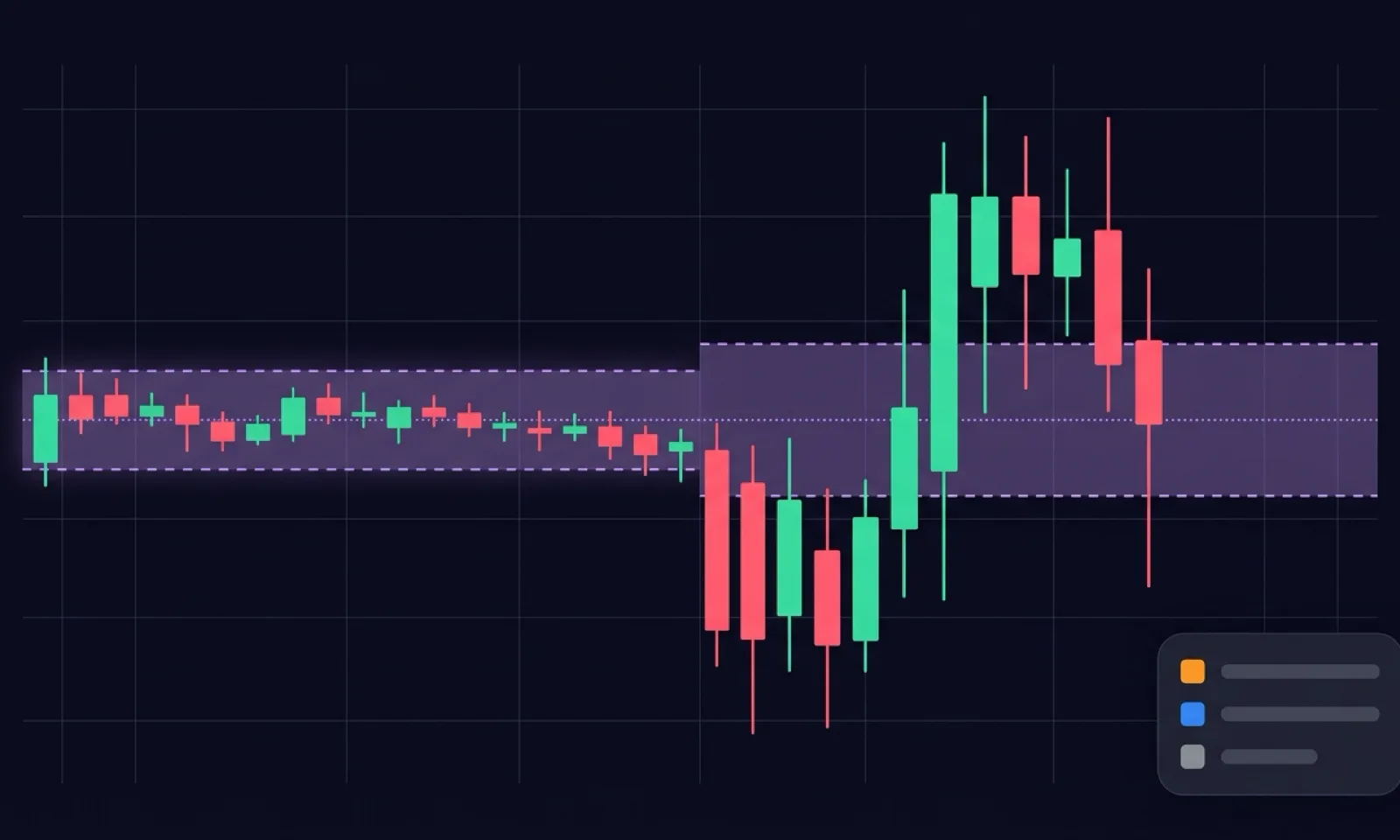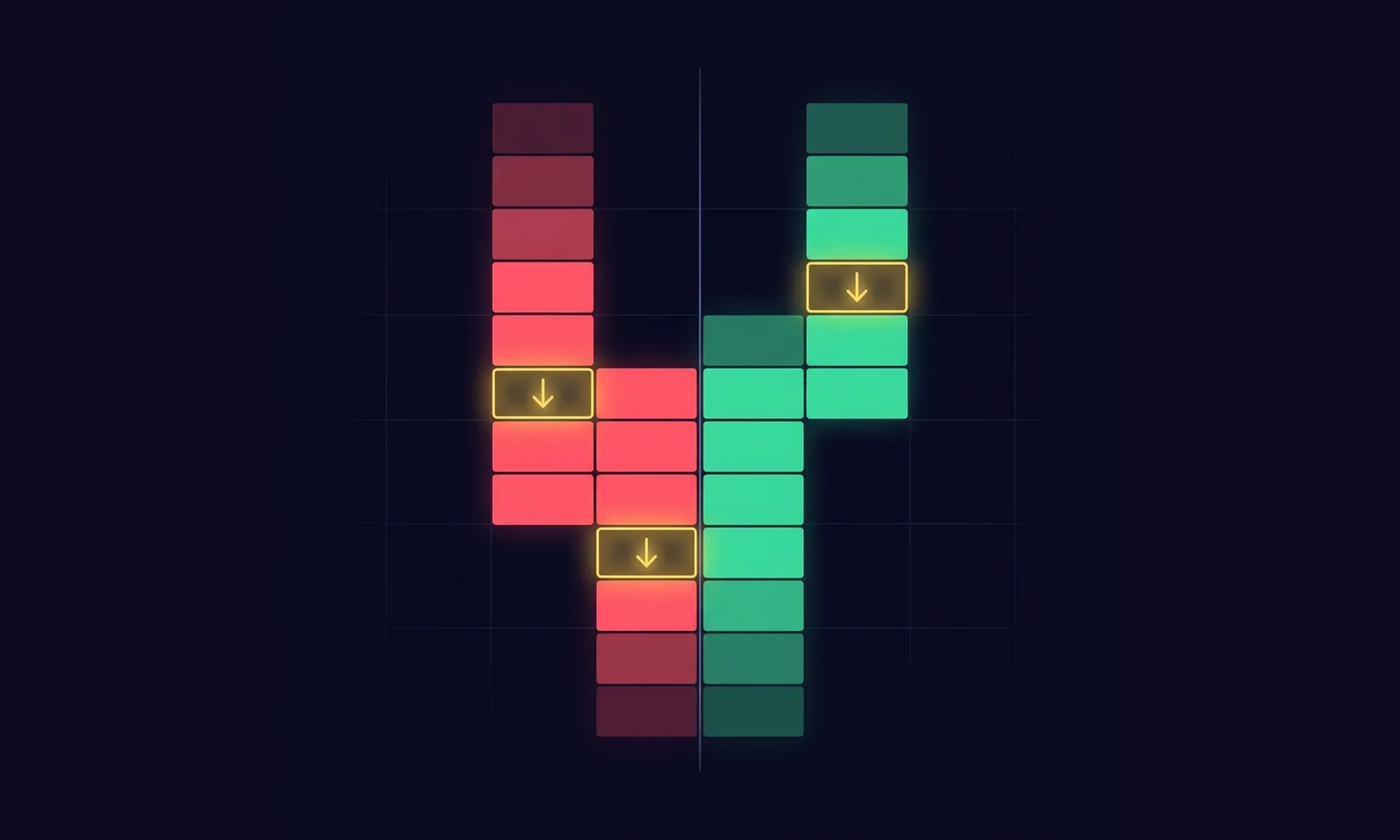
In order flow trading, participants often divide themselves into two camps: those who rely entirely on volumetric footprint charts, and those who trade strictly using order book heatmaps. However, the true trading edge lies in the middle. Combining both tools gives you a complete, high-fidelity view of the market auction.
This article details how to integrate these two worlds and presents a concrete, high-probability setup combining the heatmap and the footprint.
Why One Tool Alone Is Not Enough
To understand the power of synergy, you must examine the specific questions each tool answers:
- Liquidity Heatmap: Answers the question: “Where do large players want to trade, and what obstacles are they setting up?” It displays passive limit orders. The downside is that limit orders can be canceled at any time (spoofing).
- Footprint Chart: Answers the question: “What is actually happening in the market, and who is aggressive?” It displays executed volume (market orders). The downside is that you cannot see the limit barriers lying ahead of the price.
If you trade solely based on the heatmap, you will fall victim to spoofing algorithms. If you trade solely based on the footprint, you cannot tell if the price is turning in mid-air or hitting a major institutional block. Integrating them provides confluence between intent (the order book) and action (executed order flow).
The Core Setup: Absorption at a Limit Wall
This setup aims to capture market reversals at key support and resistance levels by identifying institutional positioning.
Step 1: Locating the Wall on the Heatmap
On the liquidity heatmap, identify a thick, stable limit wall (e.g., buy limit orders at support). The wall must show a bright, solid color and must not fade as the price approaches.
Step 2: Level Retest and Aggressive Attack
Price declines toward this buy limit wall. You want to see aggressive sellers hitting the bids. On the footprint, this appears as diagonal selling imbalances and a sharp spike in negative delta.
Step 3: Confirming Absorption and Delta Divergence
This is the critical juncture. Even though the footprint and the Cumulative Volume Delta (CVD) show heavy aggressive selling (CVD is sloping downwards), the price halts directly at the heatmap wall, refusing to tick lower.
- The Mechanics: The passive buyer (the wall) is absorbing all aggressive market sells.
- Footprint Confirmation: The footprint candle closes higher (green body) and leaves a long tail (wick) at the bottom extreme. You will see Trapped Traders who sold at the absolute low and are now offside.
Step 4: Entry and Stop-Loss Placement
Enter long when the delta on the footprint flips back to positive (confirming rejection).
- Stop-Loss: Place it tightly behind the wall on the heatmap (typically 1 to 2 ticks below). Since the wall is real and defended, it serves as a protective shield.
- Profit Target: Target the nearest opposing limit wall on the heatmap or the liquidity voids (zero prints) that price left during its rapid drop.
Summary of Rules for Synergistic Trading
| Market Phase | Heatmap Focus | Footprint / CVD Focus |
|---|---|---|
| Pre-Entry | Identify a long-standing limit wall | Watch price approach and look for momentum deceleration |
| On Contact | Wall must hold (no pulling), showing absorption | High volume at extremes, diagonal imbalances |
| Confirmation | Fresh liquidity added to defend the level | Delta divergence on CVD, Trapped Traders on footprint |
| Execution | Place stop-loss 1–2 ticks behind the wall | Enter on rejection candle or delta flip |
Frequently Asked Questions
Why is it not enough to trade solely off the heatmap walls?
Because walls can be fake (spoofing). Algorithms pull these orders just before touch. You need the footprint to verify if volume is actually executing against the wall (absorption) or if the orders are being pulled.
What is CVD divergence and how does it help?
CVD divergence occurs when aggressive traders (market orders) push in one direction but price moves in the opposite direction or stalls. For example, falling CVD (aggressive selling) with stable price confirms that passive buyers on the heatmap are successfully absorbing the pressure.
Who are trapped traders?
Trapped traders are market participants who entered positions at extreme prices just before the market reversed. On a footprint, they show up as high volume at the low of a candle that closes green. As they are forced to cover their positions, their buying momentum pushes the price higher.
Where exactly should I place my stop-loss when trading walls?
Place your stop-loss just behind the limit wall displayed on the heatmap. If the wall is backed by real size, price should not breach it, allowing you to use a very tight stop-loss and achieve a high Risk-to-Reward Ratio (RRR).
Can this setup be used for intraday breakouts?
Yes. During a breakout, you want to see the opposing wall disappear (pulling) while the footprint prints stacked imbalances in the direction of the breakout. This confirms a clear path and aggressive institutional participation.
You can combine these concepts in real-time using our Volume Imprint (footprint) and Liquidity Heatmap studies for MotiveWave. Both tools share underlying depth data and are optimized to run together in the same workspace. To analyze cumulative delta, combine them with the CVD indicator. Related reading: How to Spot Institutional Activity on Footprint Charts, Spoofing vs. Absorption on the Heatmap, Footprint Imbalance & Absorption Guide, Liquidity Heatmap & Walls.